
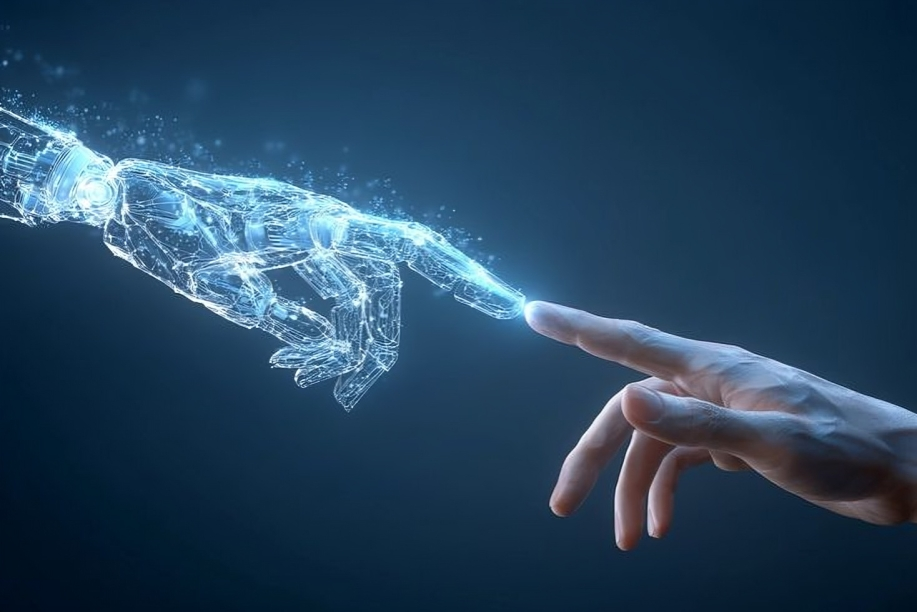
The rapid growth of artificial intelligence recently has changed the way we create, communicate, and innovate. Be it writing articles or generating images, composing music, or designing products, AI is quickly changing the creative world in ways never thought possible before.
That brings up the big question: AI vs Human Creativity – who will win in future?
In future, creativity will no longer be a talent or skill but a very important war zone where humans and AI collaborate shoulder to shoulder, competing yet working together at the same time.
Understanding AI creativity
With artificial intelligence, it’s possible to learn from enormous amounts of data and create new content based on patterns. The tools – ChatGPT, Mid journey, Gemini, and DALL-E – can create artwork and illustrations, write articles, stories, and scripts, perform video and image editing, generate music and voices, and even design websites and apps.
These tools are becoming so powerful, fast, and affordable that they help industries cut down drastically on time, cost, and manual effort. For instance, AI can create hundreds of design concepts within a few seconds, which would take a human many days to finish.
What Makes Human Creativity Unique
The real competition between AI vs Human Creativity is not about replacing each other — it is about how effectively both can combine efforts. In future, the most successful creators will be those who know how to use AI as a partner, not a competitor.
Human creativity is special because it comes from our lives, feelings, and experiences. We create things that are meaningful because we’ve lived through them. Unlike machines, we can imagine new things and make connections that are unique.
Our creativity is shaped by our culture, relationships, and values. We add emotions, humor, and personal touches to our work. It’s not just about making something; it’s about sharing a part of ourselves.
That’s what makes human creativity so unique. We bring our whole selves to our work, and that’s something machines can’t copy.
The Future: Collaboration, Not Competition
Instead of asking the question, “AI vs Human Creativity – who will win?”, perhaps we need to ask the real question: “How can humans and AI work together to create something much more powerful than either could achieve?” The future of creativity is not about one replacing the other; the future of creativity is about combining strengths. In collaboration, human and AI form a powerful partnership wherein both sides contribute what they do best.
How Collaboration Will Work?
In the future, AI will act as a supportive creative partner, not a competitor. AI can handle repetitive tasks, analyse huge amounts of data, generate quick ideas, and produce initial drafts or prototypes at incredible speed. This makes creative processes much faster and more efficient. For example, an AI tool can come up with multiple design concepts instantly, draft the first version of an article, or create marketing visuals in just a few seconds.
On the other hand, human qualities include imagination, emotions, empathy, cultural understanding, artistic depth, and ethical thinking-all things machines are not even remotely able to possess. Humans are able to shape ideas with real meaning, emotional resonance, and personal storytelling. While AI can generate content, humans refine, improve, and transform it into something unique and purposeful.
Why Collaboration Wins?
When AI and humans work together, creativity becomes faster and more innovative, and ideas gain deeper meaning and purpose. Businesses can achieve better results with less time and effort, because AI handles repetitive tasks while humans focus on strategy, imagination, and emotional connection. This partnership allows both to operate at their best, producing outcomes that neither could achieve alone.
Creativity in the Age of AI: A New Definition
As we move closer to 2026, creativity itself is being redefined. Earlier, creativity was often associated with raw talent, intuition, or artistic brilliance. Today, creativity is equally about how well one can guide, prompt, refine, and strategically use intelligent tools. This shift does not reduce the value of human creators; instead, it expands their potential.
AI has changed the speed at which ideas can be tested. What once took weeks of brainstorming can now happen in hours. But speed alone does not guarantee success. Without human judgment, creativity can become repetitive, shallow, or disconnected from real audiences. That is where humans remain essential.The future creative professional will not be someone who works against AI, but someone who knows how to work with it.
The Impact of AI on Creative Industries
AI is already transforming multiple creative industries, and by 2026, this impact will be even more visible.
Content Creation
Blog writing, ad copies, video scripts, and social media captions are now being assisted by AI tools. These tools help generate ideas, outlines, and drafts quickly. However, the final tone, message, and emotional appeal still depend on human creativity.
Design and Visual Arts
AI-generated images and videos have made design more accessible. Small businesses can now afford professional-looking visuals without massive budgets. Yet, human designers still play a critical role in brand identity, originality, and storytelling.
Music and Entertainment
AI can generate music, sound effects, and even voiceovers. But music that connects deeply with listeners still comes from human emotions, life experiences, and cultural context.
Marketing and Branding
Marketing has become one of the strongest examples of AI-human collaboration. Data analysis, audience targeting, performance tracking, and optimization are handled efficiently by AI, while humans focus on strategy, creativity, and emotional connection.
Why Human Creativity Still Matters in Future
Despite AI’s rapid growth, human creativity will not lose its importance. In fact, it may become even more valuable.
Humans understand context. We know why something works in one culture and fails in another. We sense trends before data confirms them. We understand emotions that cannot be quantified easily—hope, fear, aspiration, nostalgia, and trust.
Human creators also carry ethical responsibility. AI can generate content, but it cannot decide what should be created. Humans must guide AI to ensure creativity remains inclusive, responsible, and meaningful.
Most importantly, humans create with purpose. Machines can generate outputs, but humans create stories that inspire action.
AI and Creativity in Digital Marketing
One of the most practical examples of AI-human collaboration can be seen in digital marketing.In 2026, digital marketing will no longer be about manual posting or guesswork. AI will handle:
- Audience behaviour analysis
- Ad performance prediction
- SEO optimization suggestions
- Content scheduling and automation
- A/B testing at scale
But AI cannot replace:
- Brand voice creation
- Emotional storytelling
- Cultural relevance
- Strategic decision-making
- Long-term vision
This is where human creativity becomes indispensable.
Creativity as a Competitive Advantage
In a future where advanced AI tools are available to everyone, creativity will become the real differentiator. When technology is no longer exclusive, success will depend on how imaginatively and strategically those tools are used. In the ongoing discussion of AI vs Human Creativity, it becomes clear that while AI provides efficiency and speed, creative direction determines impact. If two businesses use the same AI tools, the one with stronger creative vision, clearer storytelling, and deeper audience understanding will stand out. This applies equally to individuals. Professionals who succeed in 2026 will be those who combine creative thinking with strategic planning, emotional intelligence, and a solid understanding of AI technologies.
Education and Skill Development for the Future
The debate around AI vs Human Creativity has a strong influence on education and skill development. Instead of teaching students to fear artificial intelligence, education systems must prepare them to work with AI creatively and responsibly. Future creatives and marketers will need to understand how to guide AI tools effectively, use them to enhance content creation, interpret data meaningfully, apply ethical judgment, and solve problems creatively. In places like Palakkad, this shift can open new career opportunities for young professionals, freelancers, and entrepreneurs who want to compete globally while continuing to work within their local environment.
Ethical Creativity in the AI Era
As AI becomes more powerful, ethical creativity becomes increasingly important. In the age of AI vs Human Creativity, humans must take responsibility for ensuring that AI-generated content remains authentic and trustworthy. Cultural sensitivities must be respected, audiences should never be misled or manipulated, and original creators must be properly acknowledged. These ethical responsibilities cannot be automated or handled by machines. They require human judgment, empathy, values, and accountability, reinforcing the essential role of humans in guiding creative work.
Who Really Wins in Future?
This brings us back to the central question: in the debate of AI vs Human Creativity, who will truly win in future? The answer lies not in choosing one over the other, but in understanding how to combine both effectively. AI will continue to excel in speed, scalability, and efficiency, while humans will lead in meaning, emotional depth, purpose, and ethical awareness. Together, they create outcomes that are far more powerful than what either could achieve alone.
Final Thoughts
By 2026, creativity will no longer be a solo effort driven purely by human skill or machine capability. Instead, it will be a collaborative process where human imagination works alongside artificial intelligence. The fear of replacement will gradually give way to opportunities for growth, innovation, and impact. Ultimately, the future of creativity does not belong to AI alone; it belongs to humans who know how to use AI wisely, ethically, and creatively.